Truck insurance is purchased to cover specific cars, and it is usually acquired by the owner of those vehicles. The insurance likewise only applies when people who are listed on the insurance plan are using the car for company purposes. The individuals listed on the policy will also determine the expense of the policy, as their driving record is a crucial aspect for identifying regular monthly premiums.
They are accountable for insuring their fleet. These are people who own and run their own trucking company - personal use semi truck insurance. This phrase usually refers to individuals, and they most often own their automobiles. Sometimes the "owner" is leasing their car from a motor carrier who owns it, and in these cases, the vehicle is normally insured by its owner.
Individuals who regularly carry products for their company utilizing their personal lorry might be asked to purchase their own insurance or might be compensated by their employer for insurance coverage expenses. Any of these services can acquire commercial truck insurance. Protection is available for a single box truck or for a whole fleet of semi-trucks.

All About How Does Commercial Truck Insurance Work?
Under the terms of the arrangement, the insurance coverage business will pay for damages, repair work, and medical or legal expenditures connected with a covered occurrence (commercial truck insurance requirements by state). Typically, an occurrence is only covered when the lorry is listed on the policy, the motorist is noted on the policy, and the occurrence happens during business operation.
If the incident is covered under the policy, the insurance policy holder will be responsible for all costs incurred as much as the deductible. The insurance company will spend for any remaining costs beyond http://www.bbc.co.uk/search?q=commercial truck insurance the deductible and up to the policy limitation. Insurer vary in how they handle costs after a mishap. Lots of have a network of pre-approved service center that policyholders must use to evaluate damages and repair the truck - commercial truck insurance https://strongtieusa.weebly.com/blog/why-minimum-coverage-is-actually-minimal-coverage5329078 requirements by state.
Other insurance provider may ask you to search for cost estimates from various car repair stores, or even send their own agent to approximate the expense of repair. Bear in mind that some insurance companies might deal with a reimbursement model, in which the policyholder will need to pay all expenses for repair in advance and then be repaid by the insurance coverage company for costs that exceed the deductible. This table sums up the federal minimum liability requirement for trucks based upon the various kinds of freight being transferred: Type of FreightMinimum Liability CoverageNon-hazardous freight (in vehicles under 10,001 lbs.)$ 300,000Non-hazardous freight (in cars over 10,001 pounds.)$ 750,000 Oil (transferred by for-hire and personal providers)$ 1,000,000 Dangerous product or explosives (carried by for-hire and personal providers)$ 5,000,000 Motor carriers transporting family goods need to likewise preserve cargo insurance of $5,000 per car and $10,000 per incident.
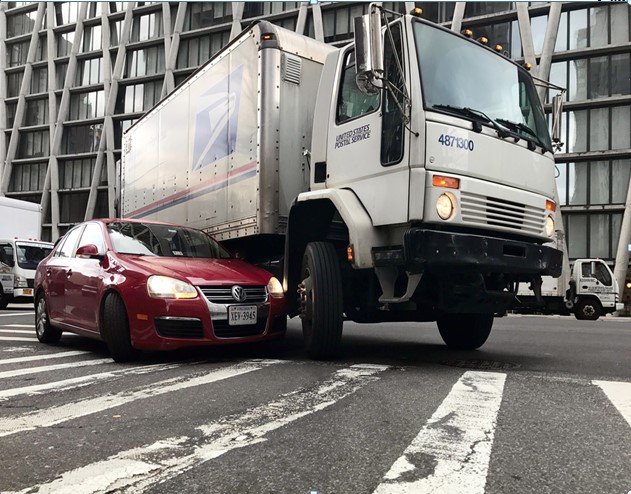
Some Known Facts About Commercial Truck Insurance - Hub International.
Commercial trucks, such as semi-trucks, that transport cargo in between states are subject to protection minimums under federal law, while those that stay within state lines undergo coverage minimums under state law. Just like federal laws, the amount of liability protection that mentions require will normally depend upon the size of the automobile and the kind of freight it is transferring.
However, household products providers in California require greater cargo insurance coverage, at $20,000 per automobile and $20,000 per incident. Some states, like Texas, also have a lower coverage minimum for intrastate basic freight ($ 500,000 instead of $750,000). Many states have their own insurance filings, as well. For instance, https://strongtieusa.weebly.com/blog/why-minimum-coverage-is-actually-minimal-coverage in California, commercial trucks typically need a Motor Carrier License and must send an MCP-65 filing to validate that they have actually the needed liability insurance coverage.
Similarly, company owners who operate tow trucks in Texas must submit a Form T to show adequate liability insurance. Florida requires that business truck motorists convicted of a DUI submit an FR 44 filing, which must be kept for at least 3 years, validating higher insurance coverage limitations. This guide references the term "covered event." So what makes up a "covered occurrence" under commercial truck insurance? That generally depends on individuals covered under the policy, individuals involved in an occurrence, the type of truck, and the nature of the occurrence.